The Defense Innovation Unit buys commercial and dual-use tech through Commercial Solutions Openings, awarding non-dilutive Other Transaction prototype contracts in as little as 60–90 days — and successful prototypes can jump straight to sole-source production. NSIC adds ~$1–3M awards for pre-Series-A hardware at TRL 3+. This guide covers how both work — whether you're a funded startup, a stealth team, or an idea on a whiteboard — and how engineering simulation proves your physics before a program office ever sees it.
Specific, current Defense Innovation Unit (DIU) & NSIC funding — what it is, how to apply, the stages, who gets accepted, and the events where it's decided. Everything links to the official source.
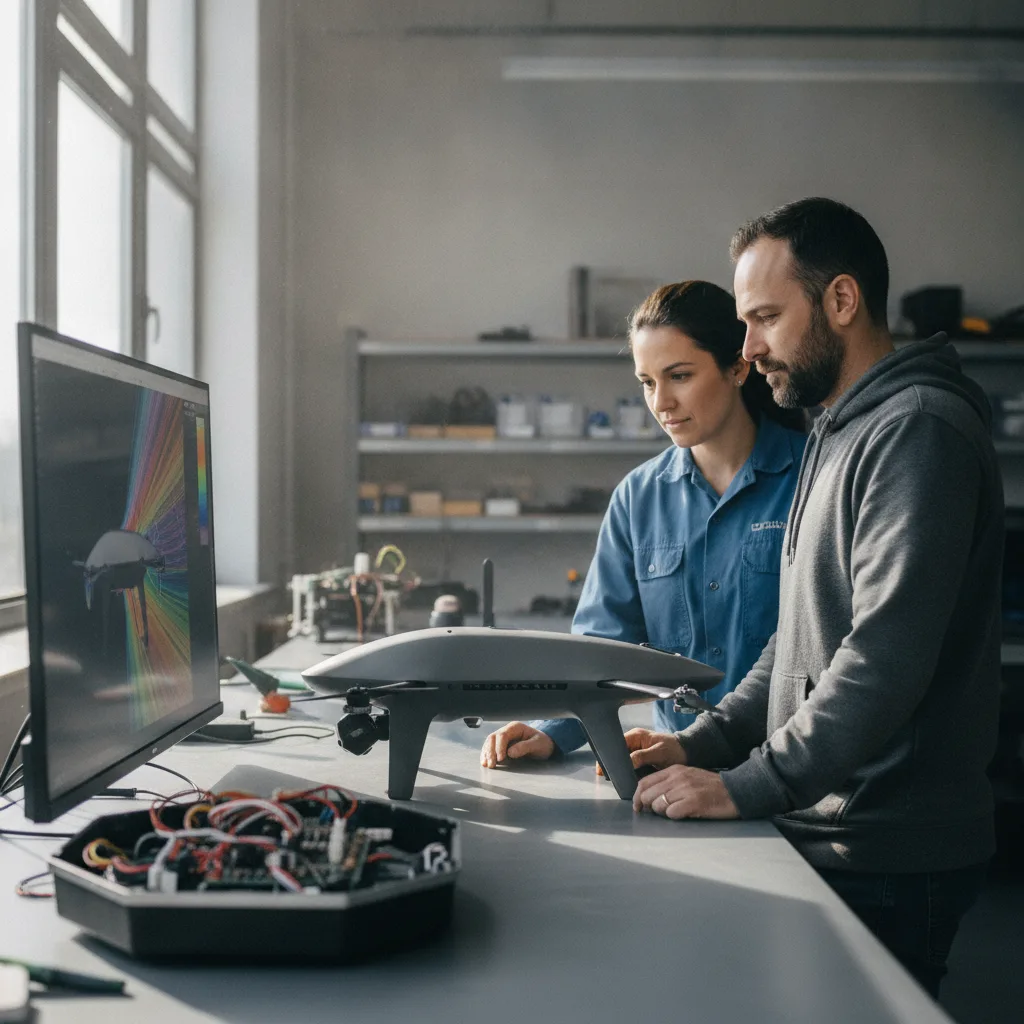
The technology these funders back usually has to be simulated before it's believed. We arrange Ansys evaluation licenses, live engineering support, and free learning — so you can build the MVP that wins.
You're looking for funding in this ecosystem — and you have (or will have) technology that needs to be simulated to prove it works.
DIU's core solicitation vehicle. DIU posts Areas of Interest (specific operational problems) and any commercial entity can respond. It's a competitive, three-phase funnel: solution brief, pitch, full proposal.
~$500K–$10M+ prototype (varies by problem) · Non-dilutive
The contract you actually sign after winning a CSO. Authorized under 10 U.S.C. §4022, it sidesteps most FAR/DFARS overhead — no DCAA audits, lighter IP terms, faster negotiation.
sized to the prototype scope · Non-dilutive
The real payoff. A successful prototype OT can transition, without re-competing, into a sole-source production OT or FAR contract — often worth far more than the prototype. DIU reports ~51% of completed prototypes transition to production.
$10M–$100M+ (e.g. Anduril's ~$99M counter-UAS P-OT) · Non-dilutive
Predict lift, drag, endurance, and prop wash before you cut carbon. CFD resolves rotor-airframe interaction, stall margins, and gust response so your endurance and payload claims survive the pitch. Critical for autonomy and counter-UAS Areas of Interest.
Model stress, modal response, and fatigue on drone airframes, capture nets, and interceptor bodies under launch, maneuver, and impact loads. FEA finds the failure before a $40K test article does, and backs your durability metrics in the OT.
Simulate detection range, antenna gain, sidelobes, and multipath for low-cost sensing systems that spot small drones. HFSS designs the aperture; system-level modeling proves the coverage envelope that JIATF-401 challenges demand.
Chasing one program often means you qualify for others you haven't heard of. These sister guides cover more of the U.S. non-dilutive landscape — same honest, no-nonsense approach. Not sure which fits what you're building? Ask us — we'll point you at the right doors, even the ones that aren't ours.
America's ~$4B/yr non-dilutive seed fund across 11 agencies.
Visit →Air Force & Space Force open topics and $3–15M matching funds.
Visit →Tipping Point, TechFlights, NIAC and the space startup ladder.
Visit →Army prize competitions with a fast lane into Army SBIR.
Visit →Tell us what you're building and what you're chasing. We'll tell you what funding might fit and what an Ansys eval could cover — no cost, no obligation.
